
Fauna / Mammals
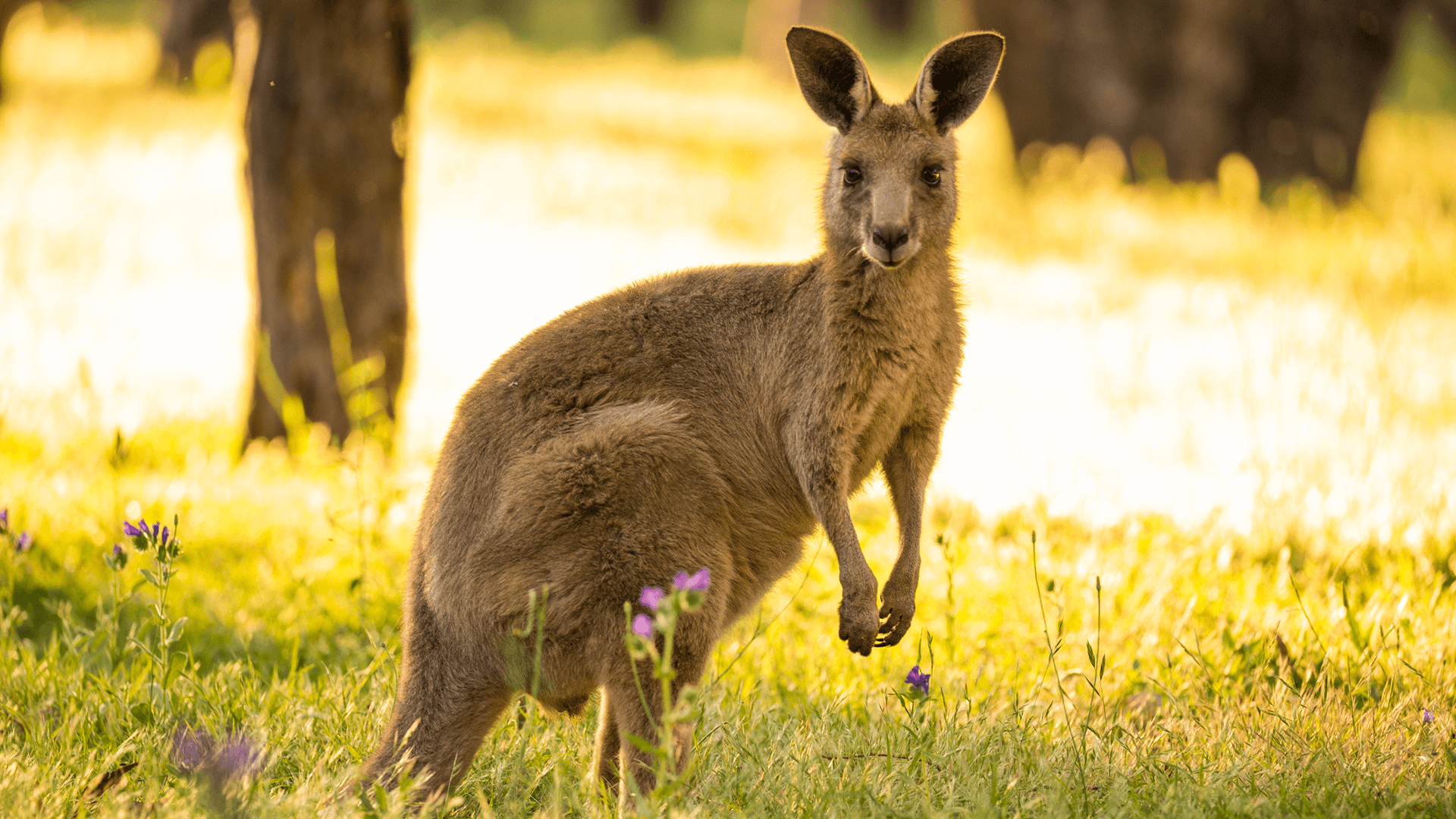
The Eastern Grey Kangaroo is an iconic marsupial mammal located in eastern Australia.
Choosing to live within a mob of 10 or more, this marsupial mammal has hind legs which are larger than their forelimbs. Interestingly, their long muscular tail is used for balance when hopping, and acts as a fifth limb when movements are slow.
Favouring dense scrubs and forests, these kangaroos are also found in a range of habitats, from farmland areas through to semi-arid mallee scrub and woodlands.
The Eastern Grey Kangaroo is predominantly a grazing herbivore, choosing grass alongside a range of plants. With the grasses they prefer to eat young green shoots high in protein, as dry grass is difficult for them to digest. Being nocturnal, large ‘mobs’ of Eastern Grey Kangaroos will gather at dusk to feed where food is most abundant.
A kangaroo’s distinctive pouch plays a vital role in raising its young. Newborn joeys are the size of a jelly bean and they climb unaided into the pouch, where they stay for 9 months. A joey becomes independent at around 18 months of age. Adult females often have 2 joeys; a tiny jelly bean in the pouch and a joey at foot.
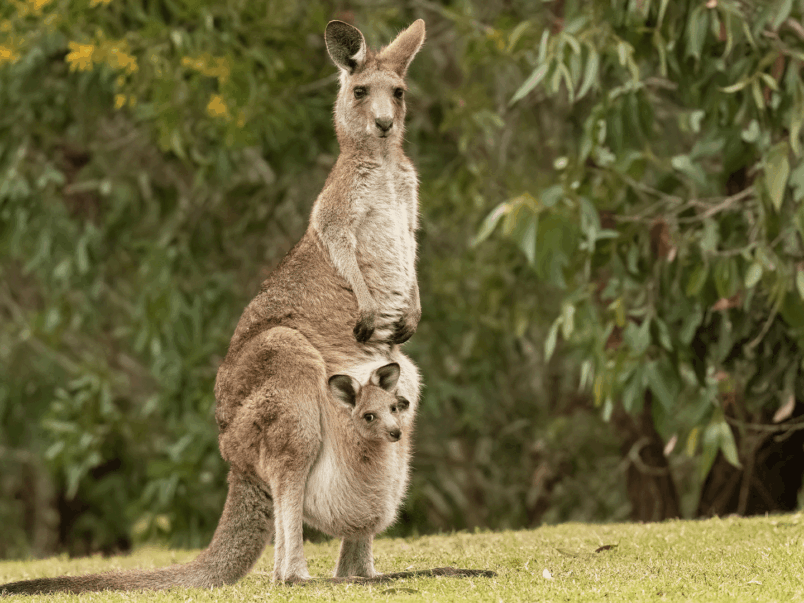
Tendons in the legs of a kangaroo act like sprung ropes and help propel it at fast speed with minimum effort, with the highest recorded speed set by a female Eastern Grey Kangaroo at 64km/hr.